New Starters
Beginners are always welcome at any of our three clubs – Bradley Stoke, Hengrove and Ashton Park.
We don’t expect you to have had any experience of martial arts before. And generally our beginners tend to be unfit too! We soon try to fix that!
Occasionally a club may be very full, or we may have a special event taking place, so please check with us before coming along for your first lesson.
Parents – please see our Children’s TaeKwon-Do section for everything you need to know about your child starting TaeKwon-Do.
TaeKwon-Do will…
- Improve fitness
- Build strength
- Increase flexibility
- Instill a sense of discipline and respect
- Challenge you both mentally and physically
- Provide achievable goals
- Give you feedback and encouragement
- Boost self confidence
- Teach self-defence skills
- be FUN!
Our classes are fun, sociable & safe, led by a 7th Dan World Master black belt with 32 years experience as a full time professional coach, assisted by senior black best instructors. Students learn from and help each other. No two classes are the same – you will never be bored!

Google reviews
In our classes you could be:
- Kicking or hitting pads
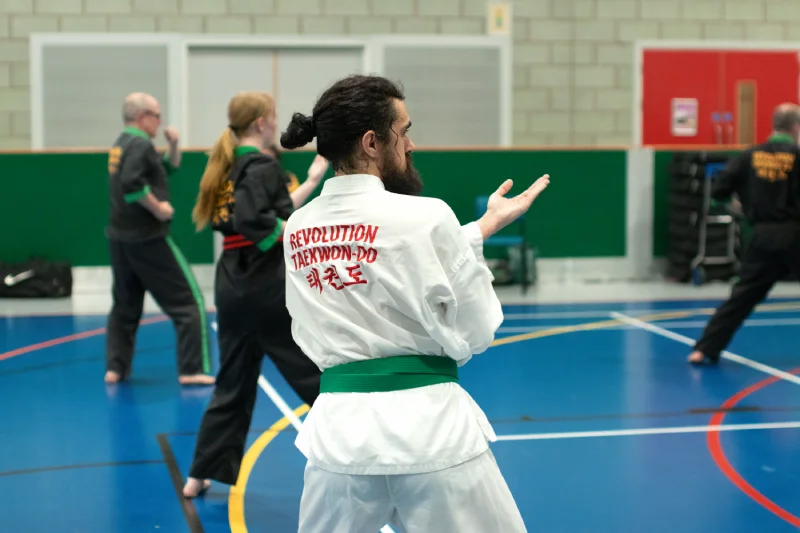
- Performing patterns (set combinations of TaeKwon-Do moves in a sequence).
- ‘Line work’ – practicing specific moves as a whole class simultaneously.
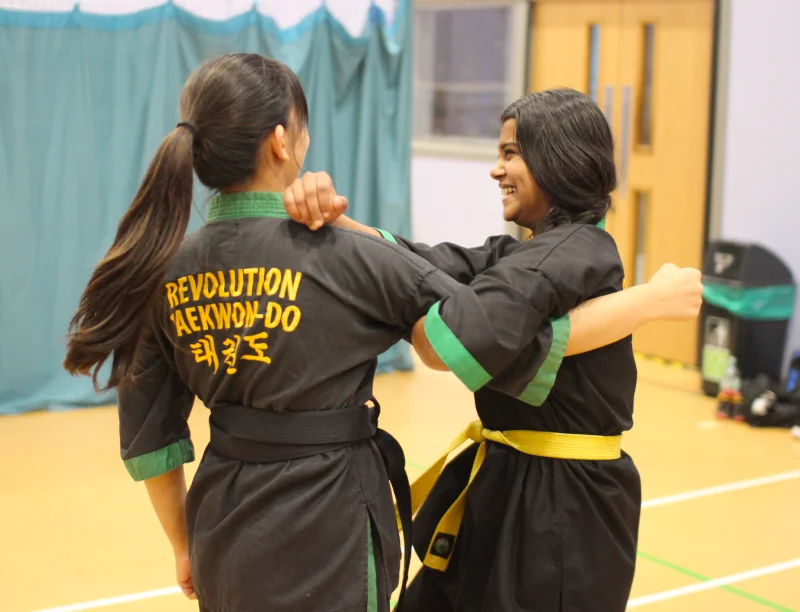
- Partnered self-defence drills
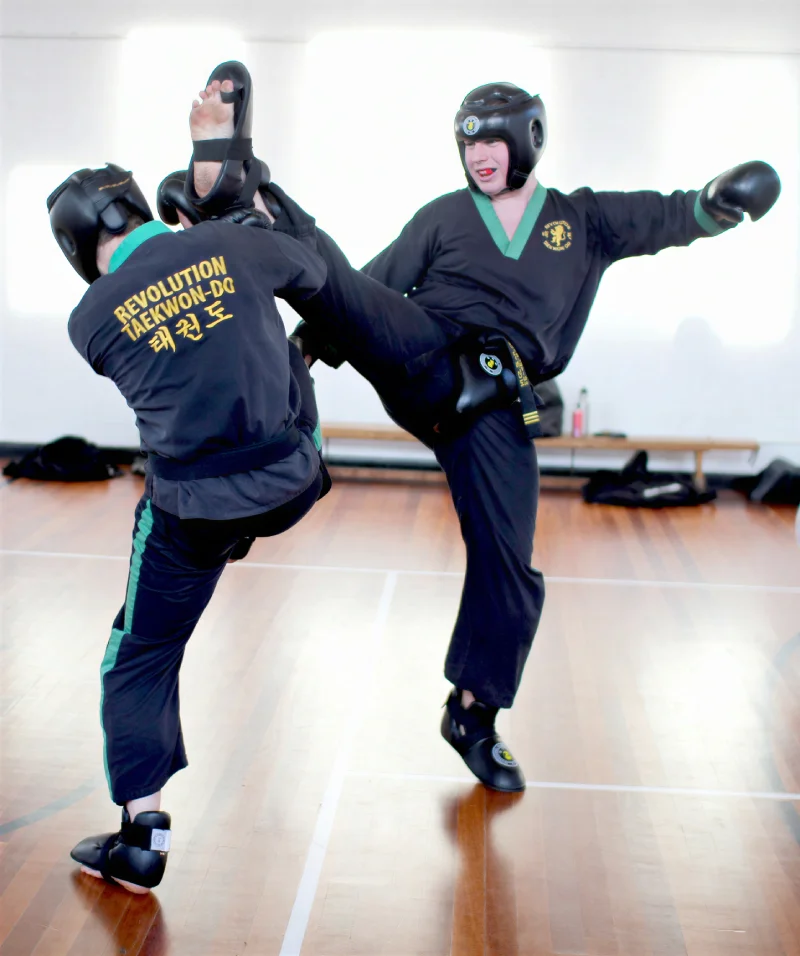
- Sparring – touch contact fights whilst wearing protective kit
- Improving your fitness, strength and flexibility with our TaeKwon-Do specific exercises.
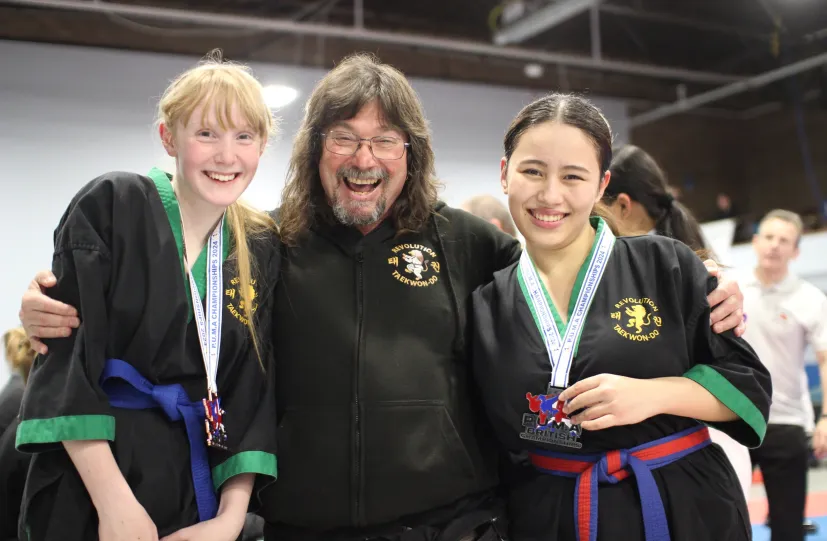
We wear coloured belts to show our current level of achievement. You’ll be gradually introduced to the exciting world of martial arts, with an achievable, long proven syllabus, at your own pace, with feedback and encouragement from very experienced instructors.
To progress to the next belt colour you’ll take regular examinations known as gradings. Passing these and being given your next belt will give you a big sense of achievement. And for those that would like to, there are regular local and national competitions too!

How Often
Training in TaeKwon-Do for both adults and children is based on attending at least two classes per week – at any venue. You can do as many as you like – all six if you want, it doesn’t cost any more. See our Timetable page for more details on when and where we train.

Cost

Then £45 monthly for up to SIX nights a week!
New starter enquiry
After your first month, training costs £45 per month by standing order (£5 extra charge for those paying by cash or cheque).
Family discount:
2nd person £45, 3rd £25, 4th £15, 5th is FREE!
There is no once-a-week or ‘by the lesson’ rate.
Other costs
Licence application – fill in a form on the first night.
£38 annual membership fee
Payable 3 weeks after joining, which includes insurance.
Dobok (training suit) £36-£38
Once you’re ready for your first grading (after 3 – 6 months of training) you’ll need one of our training suits (doboks).
Sparring safety gear
Required to take part in sparring
£124 for females and £146 for males.

Gradings
To progress through our coloured belt system you will need to take gradings. These tests are available every three months in the clubs and cost £28.
Gradings test all the main aspects of TaeKwon-Do – linework, patterns, set sparring and eventually, free sparring.
There are ten coloured belt stages before black belt; five belt colours each with a half way stage between – known as a ‘tag’.
You commence training as a white belt, after you pass your first grading you will be given the next belt colour which will be a yellow ‘tag’ (white with a yellow stripe).
The belt orders then progress through yellow, green, blue and red – each with a half way ‘tag’ stage. It takes a minimum of three and a half years to achieve your black belt.

Who are Revolution TaeKwon-Do?
Myself, Master Russ martin, my clubs and students are members of Revolution TaeKwon-Do. Revolution is a group of TaeKwon-Do clubs who have come together to help provide gradings, training sessions and support to both students and instructors alike.
Revolution provides us with physical equipment such as protective sparring equipment and clothing, whilst also providing insurance for our instructors and students.
You will find other Revolution clubs – particularly around the west of England, South Wales and South Midlands.
See the Revolution website at www.revolutiontkd.co.uk

What Is TaeKwon-Do?
TaeKwon-Do is a first cousin of Karate, a cross between Karate and Kickboxing. Translated from Korean, Tae (to jump, kick or smash with the foot), Kwon (to punch or destroy with the hand or fist), Do (the art, way or method). It is a system of unarmed combat for self-defence purposes.
Why Do TaeKwon-Do?
People start Tae Kwon-Do for many different reasons, but most commonly wanting to learn self-defence, to become and stay fit, and to have fun.
What Happens in the Lessons?
In class you will work in different areas of Tae Kwon-Do that gel together to become one: syllabus, sparring, self-defence and fitness.
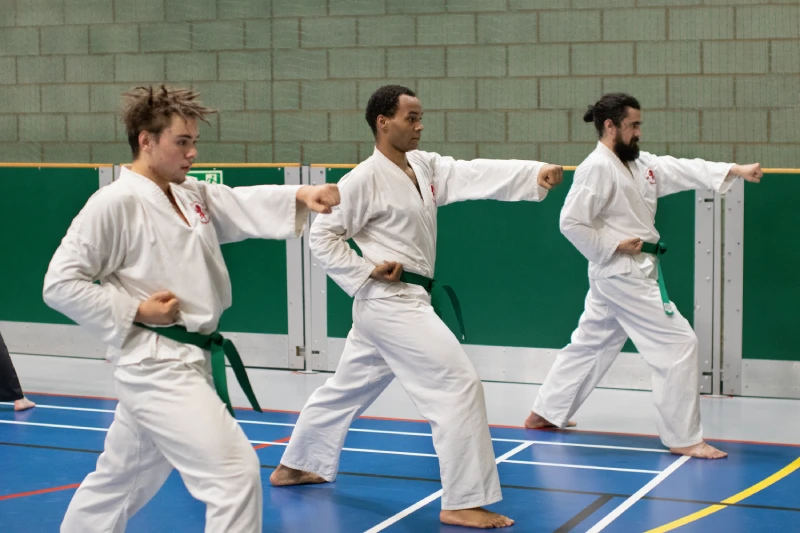
Syllabus: the foundation of what we teach – what you learn as you move through our coloured belt system towards black belt. Syllabus work takes up roughly half of training time and is comprised mainly of:
- patterns (set routines of moves against an imaginary opponent, practised as a whole class).
- line work (practising techniques moving forwards and backwards in lines).
Sparring
- set sparring (routines practised with a partner).
- sparring (see below) and at black belt level, destruction (the breaking of boards to demonstrate correct technique and power).
What About the Fighting?
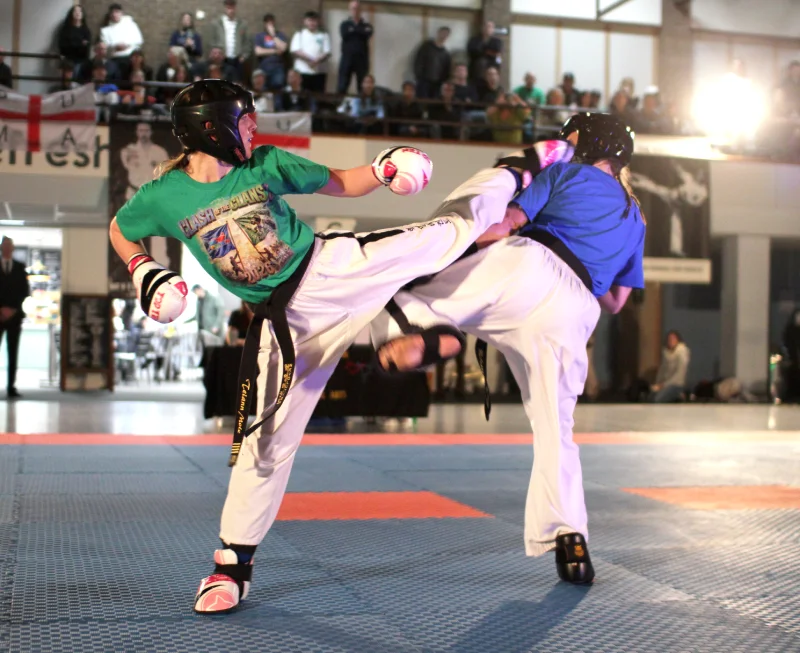
Our sparring (fighting/kickboxing) is semi-contact, meaning that whilst you attempt to hit people and they try to hit you, there is no intention or attempt to hurt or knock out in any way. Accidents rarely happen and even then are rarely serious. You will only free spar once you have enough basic skills that you can spar safely. You will learn attack and defence combinations and how to apply them. You will hit and kick pads to develop technique, speed and accuracy, and then you will be free sparring. Our free sparring is always done wearing protective equipment; head guard, gloves, foot protectors, shin guards, groin guards (for the men and boys) and gum shields.
Fitness
Just taking part in a TaeKwon-Do session is in itself a workout! The beauty is that you are constantly learning and honing your skills at the same time, which is a lot more fun than a gym!
Self Defence
Like most martial arts, we learn pattern forms. Hidden within these patterns are some very powerful techniques, and one of my personal interests is in unlocking these techniques and applying them to very real and practical self-defence situations.
More questions? See our ‘FAQ’s‘ page.

Children’s TaeKwon-Do
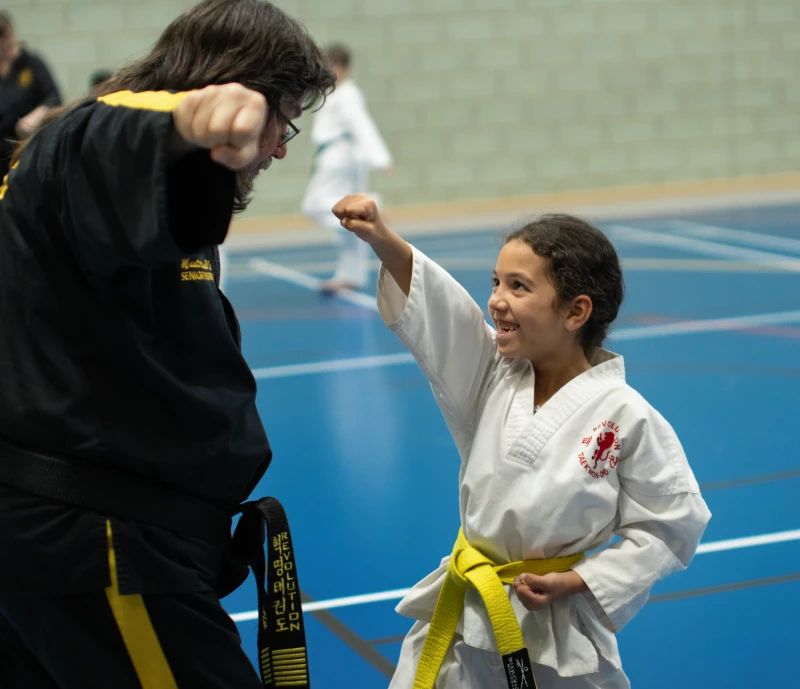
Training is based on attending at least two sessions per week at any of our three clubs, up to all six if you want! This can be useful if your child has missed a few sessions and wants to catch up, or there’s a grading coming up and they want to prepare.
As a parent myself, I fully understand the need for children to have an outlet for physical expression, for regular exercise.
Training is based on attending at least two sessions per week at any of our three clubs, up to all six if you want! This can be useful if your child has missed a few sessions and wants to catch up, or there’s a grading coming up and they want extra practice.
Children need an outlet for physical expression, for regular exercise and health.
This develops strength and flexibility, balance and co-ordination, to reinforce discipline and build self confidence. These days, children don’t get as much exercise as they used to, there’s less P.E. in schools. TV and computer games mean that children’s play is less physical than it used to be. Part of our mission is to replace this missing exercise.
Why is TaeKwon-Do Good for Children?
Children take up Tae Kwon-Do for different reasons – maybe a friend already does it and it sounds ‘cool’! Parents often seek the answer to their child’s lack of confidence or self esteem, they want to increase their fitness, or find some ‘structured activity’ to keep them busy and get them more active.
For teenagers, it can get them off the streets two nights a week – doing something positive! We have often helped children who have had problems with bullying. We don’t encourage them to physically ‘fight back’ (though we do tell them that sometimes that’s just what you have to do).
Having the knowledge and confidence that they can do so if needed can often mean that a child’s whole demeanour can change from a victim to a more confident person less likely to be bullied in the first place.
Tae Kwon-Do can be the answer to many problems. The results don’t happen overnight, your child will need to stick at it to start reaping the benefits.
What Do They Do in the Classes?
The TaeKwon-Do syllabus for children is the same as for adults, but we inject much more fun. Their concentration spans are than those of adults, so sessions are broken down into smaller chunks of instruction, mixed with games that are not only fun, but also improve children’s fitness, flexibility, strength, co-ordination etc. We use space hoppers (remember them!) to help improve leg strength, also games such as ‘ninja touch’ and other popular games. The children love to punch and kick pads so we often use small punching/kicking pads for fast pad-work sessions to improve technique and power, and in learning to put together combinations of moves which are useful for sparring.
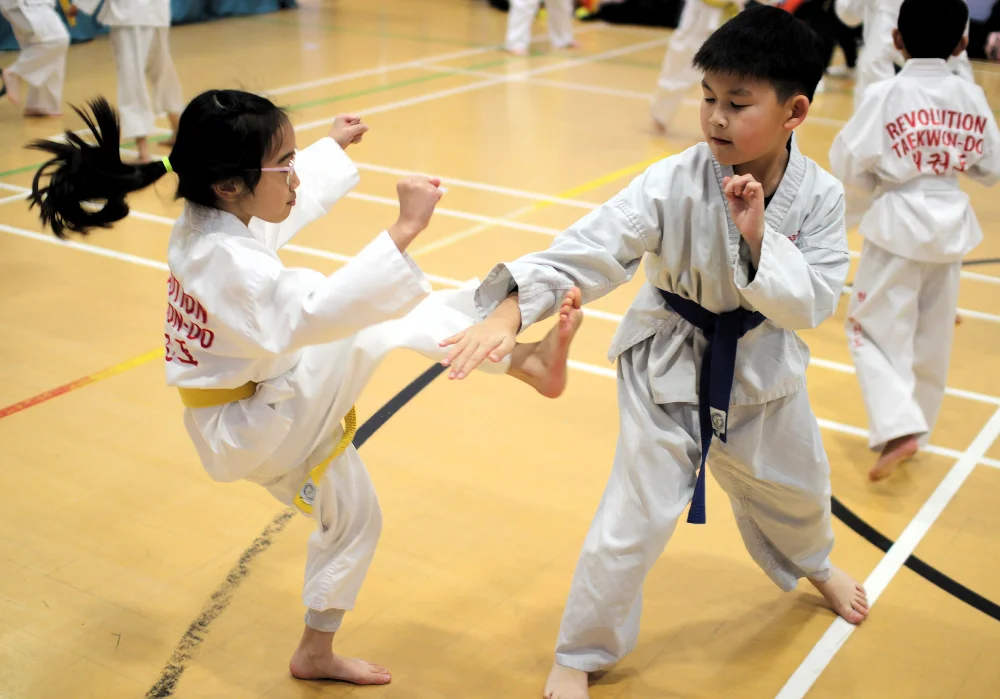
The children will be sparring – ‘touch contact’ fighting, where the opponents only attempt to make contact, not to hurt or draw blood in any way! This is always very closely monitored by a qualified instructor – anyone going too hard will be stopped. To participate in sparring everyone wears protective gear (foam head guards, hand and foot protectors, shin guards, gum shields and for the boys groin guards). This equipment is only available through us – please ask for an order form with the prices. Children are usually ready to start sparring after the first three months training.
What Does it Cost?
Children’s classes cost the same as the adults – £45 per month by standing order (£5 extra for cash or cheque). 2nd family member £45,
3rd £15, 4th £10, 5th is FREE!

What Age Can My Child Start?
We take children in our kids classes from the age of five once they have completed their first term in reception class at school (so from the January). Once children reach the age of around 12/13 we start to think about moving them up to the adults classes – both due to their physical size and maturity level.

Do You Stop for the Holidays?
No, we keep training through all the school holidays – we even train for a lot of the bank holidays. We stop training for Christmas, although there will generally be one session between Christmas and New Year. Any class cancellations will be shown on our calendar.

How Will My Child Progress?
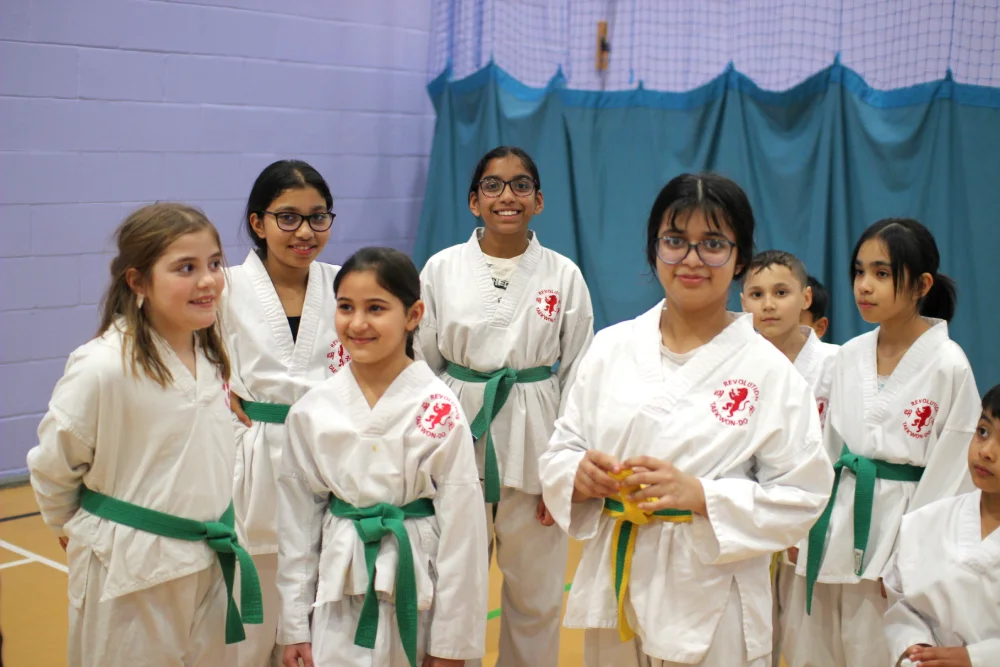
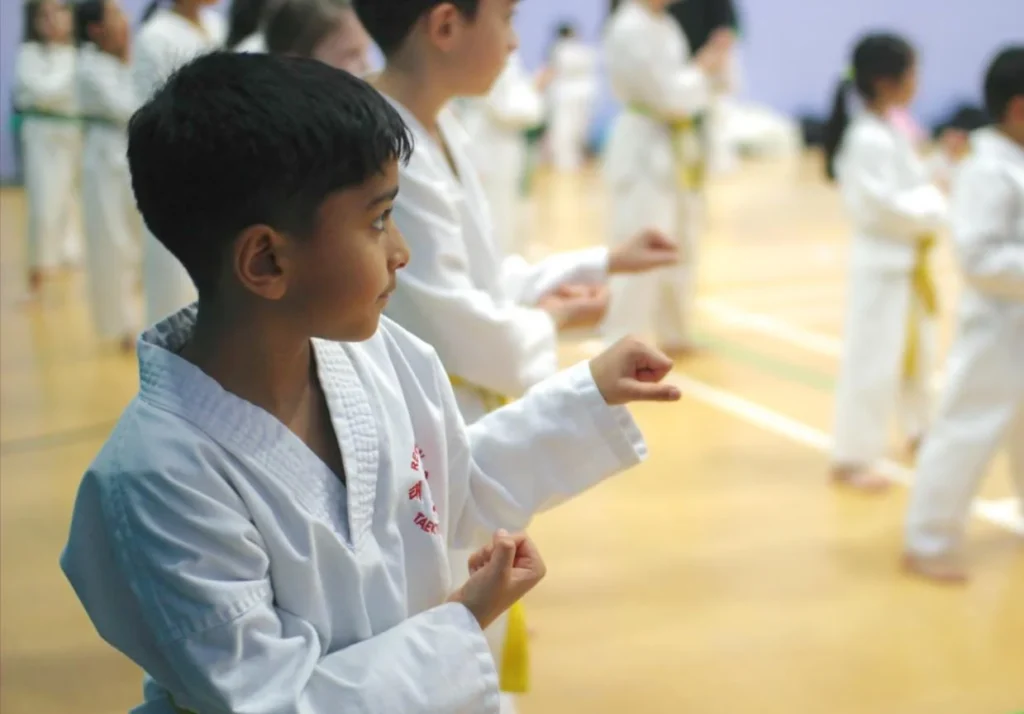
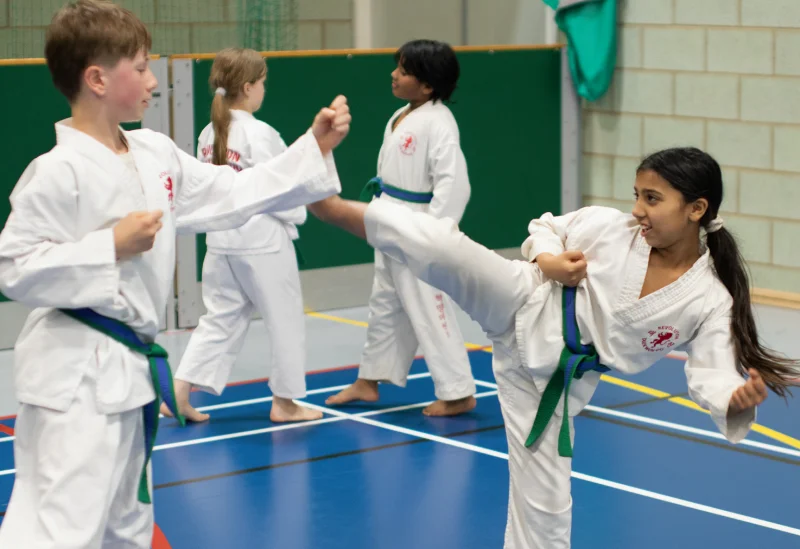
As with the adults, there are ten different coloured belts for the children. To move through the different coloured belts the children need to take exams, known as gradings. These are available in Bristol every three months, although I advise parents to expect their children to grade at half the adult speed – so every six months initially. Each grading costs £28 and once your child has passed they will receive a certificate and their new belt. Tying on the next colour of belt can be a huge confidence boost, they can look back at the other newer beginners to see just how much they have learnt and improved. They can also of course look forwards to the higher belt colours, and hopefully try to emulate some of our more senior (in grade, not necessarily age!) children.
To date I have taken around 30 children to black belt (this is an adult level black belt, not a ‘children’s black belt’ which has to be re-taken at 16), but in that time I have taught literally hundreds! It is my belief that literally any person, adult or child, can make it to black belt, the one thing they have to do is not give up!

Will My Child Be Safe?
At Bristol North & Bristol South TaeKwon-Do we take the safeguarding of children and vulnerable adults very seriously. All our instructors have had safeguarding training. Should you have any concerns you can speak to any of our instructors in confidence.
We are very proud to have been awarded the ‘Safeguarding in Martial Arts Mark’: The Safeguarding Code in Martial Arts recognises clubs and providers in England who have have demonstrated that they have reached and maintained good safeguarding standards.
For more information please see our safeguarding page. You can also find out more about the Safeguarding in Martial Arts Code, and its importance to you as a parent, by visiting their website here.



Who Are the Instructors?
All of our instructors including myself are fully qualified (our qualifications are recognised by the British Sports Council), insured and regularly DBS (CRB) checked. This qualification also includes first aid training which has been tailored to the specific needs of a TaeKwon-Do class.
We also benefit from the extra help of senior grade adults from our adults classes during the children’s sessions. These assistant instructors are never left unsupervised or unobserved during a class, they do however contribute greatly, allowing children to have a degree of individual attention – helping them with particular areas of difficulty.
We operate a child-safe policy; parents are always welcome to stay and watch at any of the classes – in fact there are always some parents in observance at every lesson. Please feel free to come and watch any of the classes and chat to other parents to find out their views on our lessons!
Please see our Instructors page and safeguarding page for more information.

Can Children Enter Competitions?
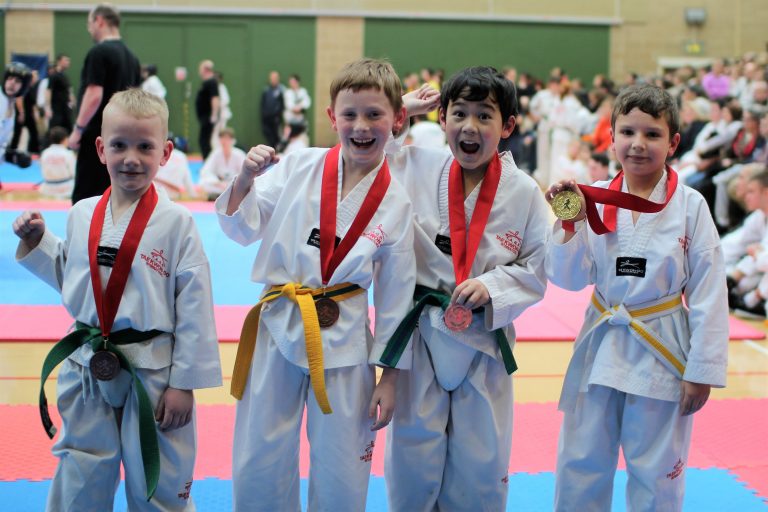
Yes, all of the ITC national and local competitions are open to both adults and children, and we can also enter you into any open competitions that you may be interested in. There are also international competitions available through our ITC membership – we have our own UK squad which regularly attends international competitions. I have in the past had an 11 year old from one of my clubs become World Champion!
I always encourage children to have a go – they will only ever be competing against children the same grade and height as them (you won’t ever have a huge 14 year old fighting a tiny 7 year old!). Competing can be a great experience for young and old alike, it can be a very good learning opportunity, and of course, winning or being placed will be a huge boost to anyone’s confidence. My students often bring home medals and trophies from both local and national tournaments. See our competitions page for more information.
How Does My Child Start?
Once your child is ready to start, you can just bring them along – there’s no need to book. Please ensure they are wearing loose comfortable clothing such as jogging bottoms and a t-shirt. Please also make sure that their trousers do not come down past their ankles where they could fall underneath their feet – this can cause them to slip over.
Please remove any jewellery, and bring along a drink of water! It is also not a good idea to stuff them full of chocolate just before training – halfway through the class they will suddenly run out of energy! It is much better to give them a snack such as flapjack after school, which should give them a sustained energy release to last through the lesson.
For more advice on nutrition for children, I recommend you visit the British Heart Foundation’s website where they have an excellent section on children’s nutrition.
For more information please see our beginners info and FAQs section.
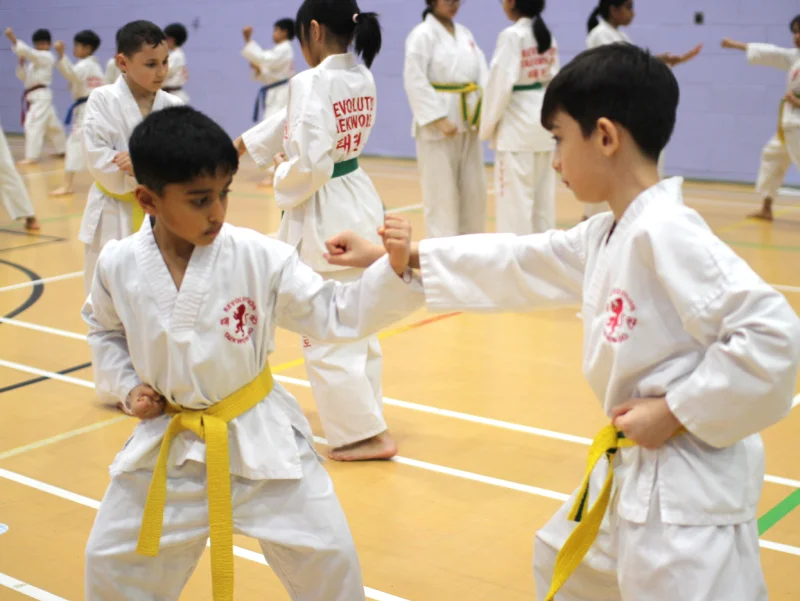

Fitness
“It is amazing how much crisper the general experience of life becomes when your body is given a chance to develop a little strength.”
~ Frank Duff
Will Tae Kwon-Do get you fit? Yes. Will it be hard work? Yes, but it will be worth it!
“Motivation is what gets you started. Habit is what keeps you going.” ~ Jim Ryun
As with starting any physical activity, it is wise to check with your doctor before taking up TaeKwon-Do. Ours is a very physical art which can put great demands on your body – but can also get you fitter, stronger, healthier and happier!
What to Expect
- The first few weeks will be hard work as your body adjusts.
- By week seven you’ll likely keep going longer, feel stronger and more flexible and have much more energy generally.
What sort of exercises will you be doing?
- Every class is different, but fitness is a very important part of Tae Kwon-Do.
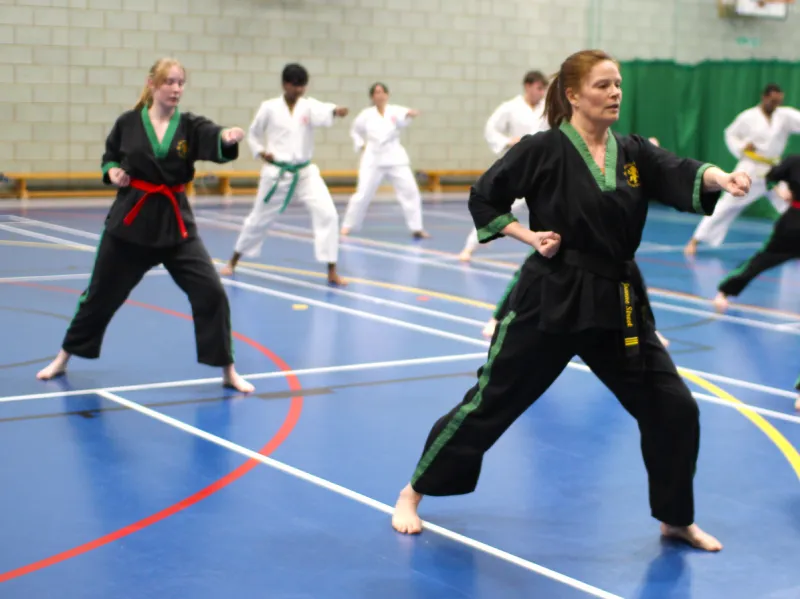
- A warm up – jogging, sit ups/push ups/star jumps/squats, shadow boxing exercises, some kicking to loosen off the legs, games.
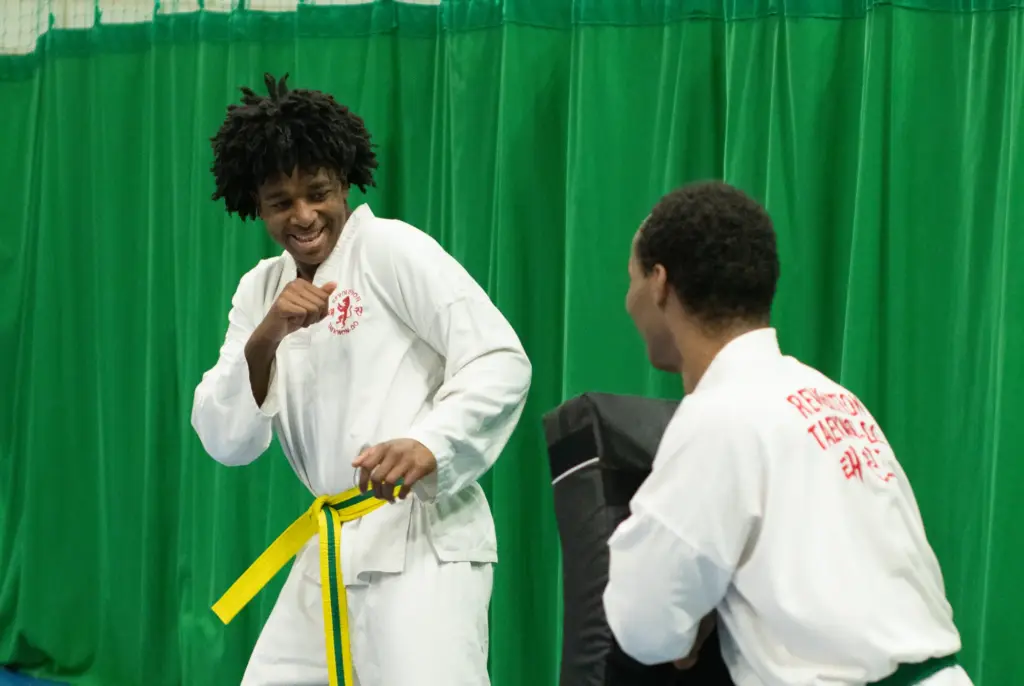
- Pad work where we punch and kick pads – an excellent way to improve your technique, but also a great fun workout.
- As much as possible I try to make fitness work skill orientated, so you are learning TaeKwon-Do technique at the same time as developing strength and cardio-vascular fitness. It’s less boring that way as well!
What Then?
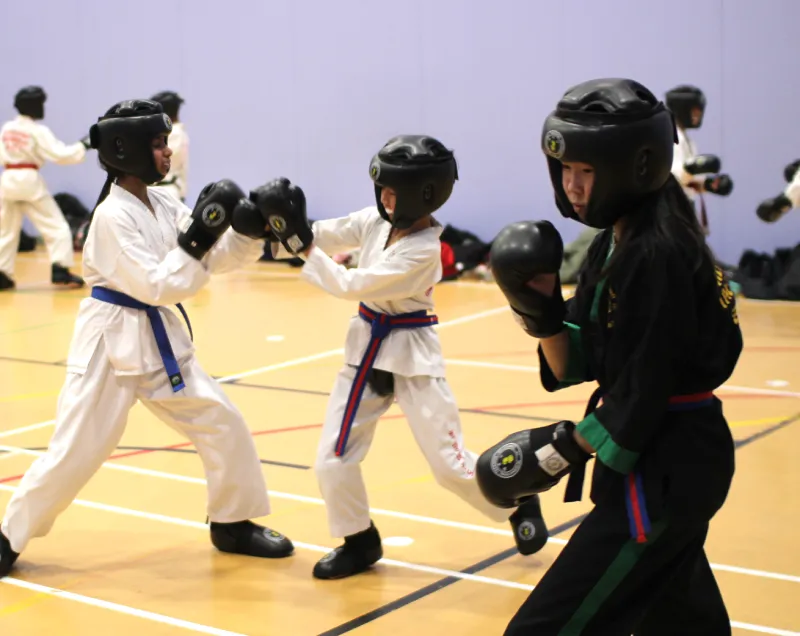
Once you’re more proficient you can take part in our semi-contact sparring – which can be incredibly hard work, but also great fun!
“Six months after starting Tae Kwon-Do I went to a rock concert. I put my daughter on my shoulders and danced constantly for two hours – something I could never have done before doing Tae Kwon-Do”
~ A Bristol South Student.
You will become fitter as more time passes. The initial fitness gain just opens the gate to becoming even fitter; the point with TaeKwon-Do is that it is not just a short sharp shock, but becomes part of your lifestyle. Many people have been with me for fifteen years or more! TaeKwon-Do gets you fit, and keeps you fit.
Martial arts clubs are diverse; some focus on sport, competitions and trophies; others are a kind of ‘lifestyle choice’ with a martial arts/aerobics philosophy. In my clubs we train for competitions and work on fitness and I teach a degree of ‘warrior philosophy’ geared towards personal self defence in the real world.
There are only so many ways a person can be attacked. I refer to these as “The common acts of violence”. Once my students are past the beginners stage and are comfortable with the basic way of moving, I then teach the individual how to use the Tae Kwon-Do techniques they have learned to address the common acts of violence that they may encounter in real life.
There are such things as ‘self defence courses’; these however have a very short term effect. Any skill that is not regularly practised will fade. It takes time and maintenance for real skills to be available when needed.
“Boards don’t hit back” ~ Bruce Lee
The breaking of boards and other materials is a traditional part of Tae Kwon-Do, used as a test of power, technique and accuracy at black belt level only.
However, I’m with Bruce Lee on this one – boards don’t hit back! For me it is much more important that students can truly defend themselves than they can bare knuckle punch through three boards!
I see a clear difference between a martial art used to win trophies and one used to defend yourself. Unlike our free sparring, there are no rules in a real fight. For a Tae Kwon-Do student to be able to defend themselves realistically, they have to be prepared to use and be trained in techniques that are banned from sparring.
Within my own personal studies of Tae Kwon-Do for self defence, I have studied at great depth the teachings of senior martial artists. I have gained a black belt in Shito Ryu Karate – an ancient form of Karate which allows me to look back at the very roots of many moves we now use within Tae Kwon-Do.
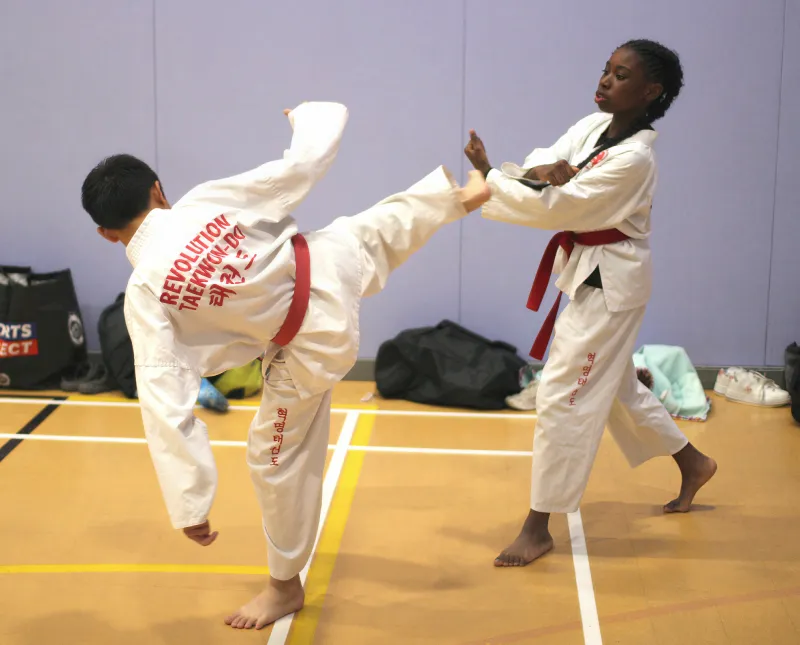
I am thus able to pass on some of the original applications of Tae Kwon-Do moves. I host regular ‘Applied TaeKwon-Do’ sessions that look purely at the self defence aspect of our art. These sessions, for senior grades only, attract students and instructors alike from all over the South West.
For more information, visit my other website: www.appliedtaekwondo.com; I have DVDs and pay-to-download DVDs for sale and a YouTube channel showing various clips of applied TaeKwon-Do: www.youtube.com/user/RussMartinAppliedTKD