Syllabus

Sajo Jirugi 1

Download Printable PDF version (523Kb)
The basic exercise Sajo Jirugi has a total of 15 moves. Sajo translated from Korean means Four Direction, Jirugi translates as Punch, so; Sajo Jirugi means ‘Four Directional Punch’. There are two versions of this exercise; the first uses low section outer forearm block, the second is identical to the first except that it uses middle section inner forearm block.
What your instructor/examiner is looking for
Patterns (or in this case, basic exercise) always start and finish on exactly the same spot (so when in a grading and you are located on position number 4, you should still be in that exact same spot when you return to your ready position at the end of your pattern).
The basic exercise Sajo Jirugi has a total of 15 moves. Sajo translated from Korean means Four Direction, Jirugi translates as Punch, so; Sajo Jirugi means ‘Four Directional Punch’. There are two versions of this exercise; the first uses low section outer forearm block, the second is identical to the first except that it uses middle section inner forearm block.
Correct Stances
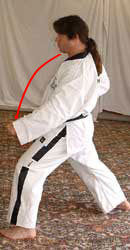
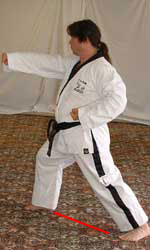
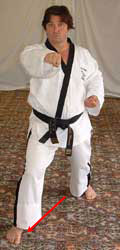
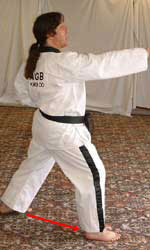
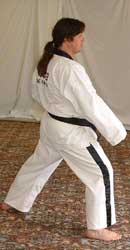
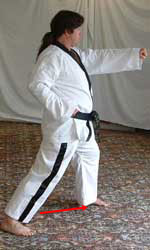
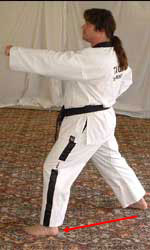
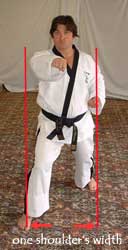
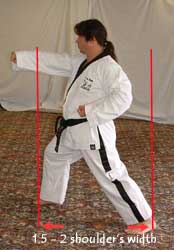
- Walking stance should be one shoulder’s width wide and 1.5 – 2 shoulder’s width long.
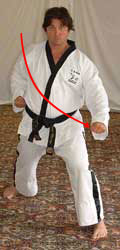
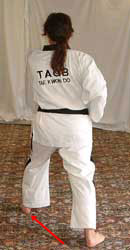
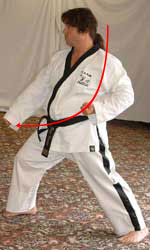
- The front knee should be bent (knee over the foot) with the foot turned slightly inward, the back leg should be locked straight with the heel on the floor.
- Weight should be distributed evenly 50/50.
Focus
- Punches should be along the middle line (aim at the V. of the suit of your imaginary opponent in front of you!).
- Your eyes always be focused on the target of your next technique.
Power
- The technique should accelerate and then end with a ‘snap’. Perform all techniques with power as if REALLY fighting. A technically perfect Sajo Jirugi but done gently, not demonstrating it as fighting technique will not get you an A-pass. HARD!!
Technique
- The punch and block should both end with a straight arm.
- The punch should show the correct use of the forefist.
- The punch/step/reaction hand should all end simultaneously.
- Punches should be to shoulder height – arm should be horizontal.
Power
- The reaction hand should finish on the belt, pulled right back with elbow tucked in, knuckles down – little finger side touching the belt (kids especially tend to have knuckles facing outwards not down!).
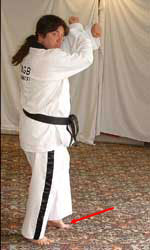
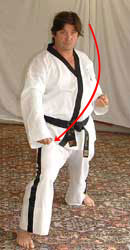
- The chamber for the low blocks should be high and with the hands facing the correct way and on the correct side (for low block the hand performing the block starts on the inside facing inwards – knuckles out, for middle block used in Sajo Jirugi 2 the hand performing the block starts on the outside, facing outwards).
- Hip twist:
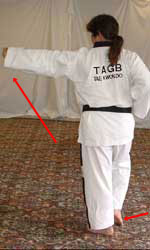
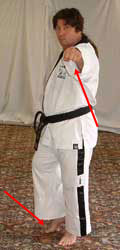
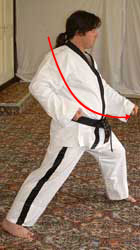
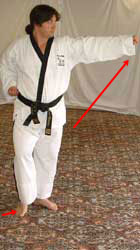
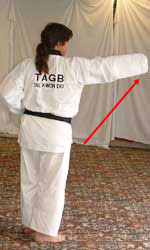
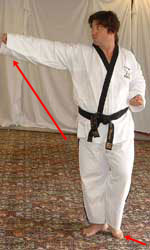
- On the punches this is achieved by reaching with the reaction hand, turning the upper body completely side on (hiding of the punching hand from the front) and then turning the body back to full facing as you punch.
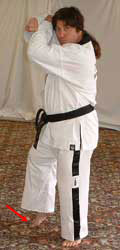
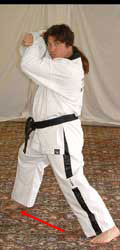
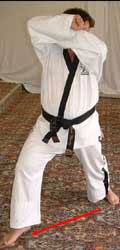
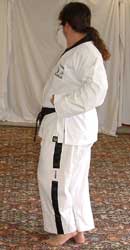
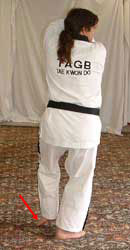
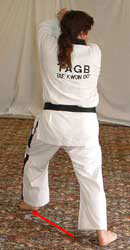
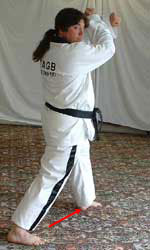
- For the low blocks; on chambering for the block the body angle should be sideways on with the back leg bent and front leg straight with the front heel pointing (nearly!) towards the front (pivoting on the ball of the foot to get to this angle), pivoting on the balls of the feet, hip twist into the walking stance as you block.
- When moving, the foot should slide along the floor, not be picked up and put down.
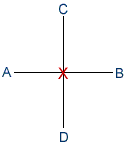
This diagram shows the pattern that all the moves make. Chunbi position starts at X, facing towards D.
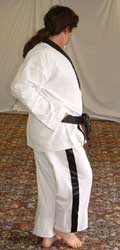
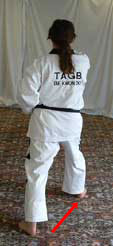
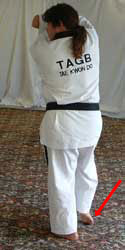
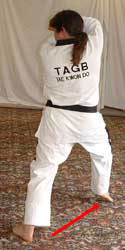
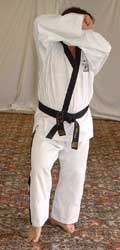
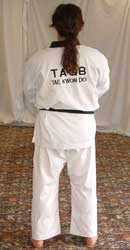
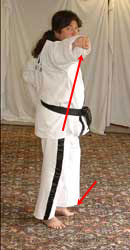
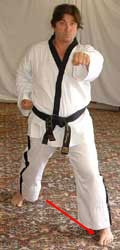
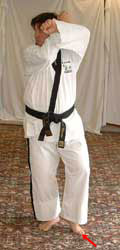
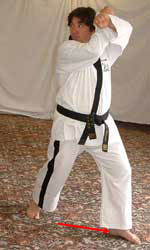
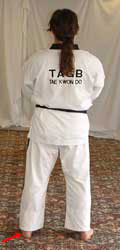
The following pictures show each of the moves – to help beginners we have broken each move down further into the ‘chamber’ (preparation) stage. Each pattern move is numbered – the number is shown at the bottom of the photo.
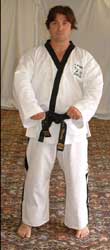
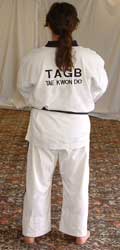
the pattern is shown rear view).